

Sea Level Rise is a cynical, ladder-climbing politician's perfect issue. It is notoriously hard to measure. It's even harder to predict. And if anything noticeable happens IRL, the politician will be long out-of-office and probably off the planet. But they can appear to Care and to Be Doing Something About It. It's perfect. There might even be some federal money in it. The insurance companies love it too since it allows them to raise the risk factor which raises the rates and everybody says "yup". I just reread Steven Koonin's chapter about it in Unsettled?. Let me try to "boil it down" for you from his Chapter 8:
The sea level has been rising and falling, and rising and falling, and rising and falling for all of determinable time–more than 400,000 years.
"Slow cycles–variations in the earth's orbit and the tilt of its axis over tens of thousands of years–change the amount of sunlight absorbed by the Northern and Southern Hemispheres…(this) cases the ice sheets covering the continents to grow or melt, putting more or less water in the oceans….So the question is not whether the sea level is rising–it's been doing that for the past 20,000 years.
Climate scientists use the concept of Global Mean Sea Level (GMSL), which is inferred from measurements over the whole globe; even though "water seeks it's own level," there are variations that are important given the fraction-of-a-millimeter precision required–the GSML is rising today at a rate of only a few millimeters per year.
And it varies all over the globe for a dozen reasons: differences in the earth's gravity from place to place, ocean currents, temperature and salinity of parts of the ocean, air pressure, local land sinking (think pumping ground water) and the vagaries of instruments like the satellites circling at 600 km (370 miles above the earth) detecting fractions of a millimeter in ocean height. Given all of that, the rise in more recent decades is higher than the average for the 20th century, but similar to the rise from 1920-1950–a period before carbon intensive development. On May 26, 1927, Henry Ford watched the 15 millionth Model T Ford roll off the assembly line at his factory in Highland Park, Michigan. There are 289.5 million cars in the US right now.
In fact, the rate of rise between 1925 and 1940–a period almost as long as eighteen-year satellite record now available–was almost the same as the recent satellite value, about 3 mm (0.12 inches) per year.
If the B'game city council wants to put new Bayfront buildings on stilts and build levees because the sea might rise a foot in the next 30 years (333% more than it may have risen over the last 30 years) and "up to six feet over the next century", go for it. But boy do I wish they were as worried about having too little fresh water as much as they are worried about facing too much salt water.

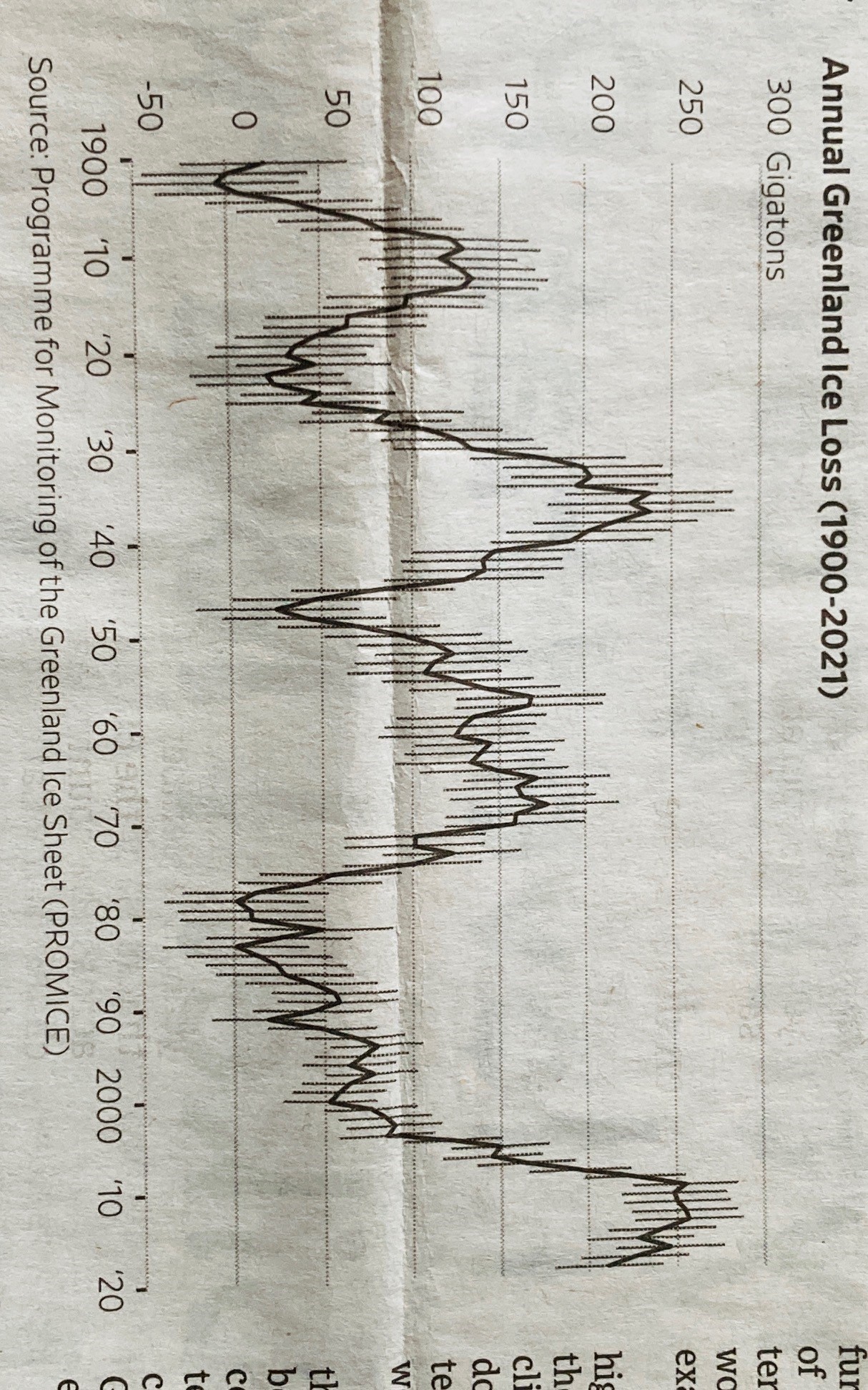
March 1 update: Here is the Greenland chart that is referenced in the comment section.

Leave a Reply